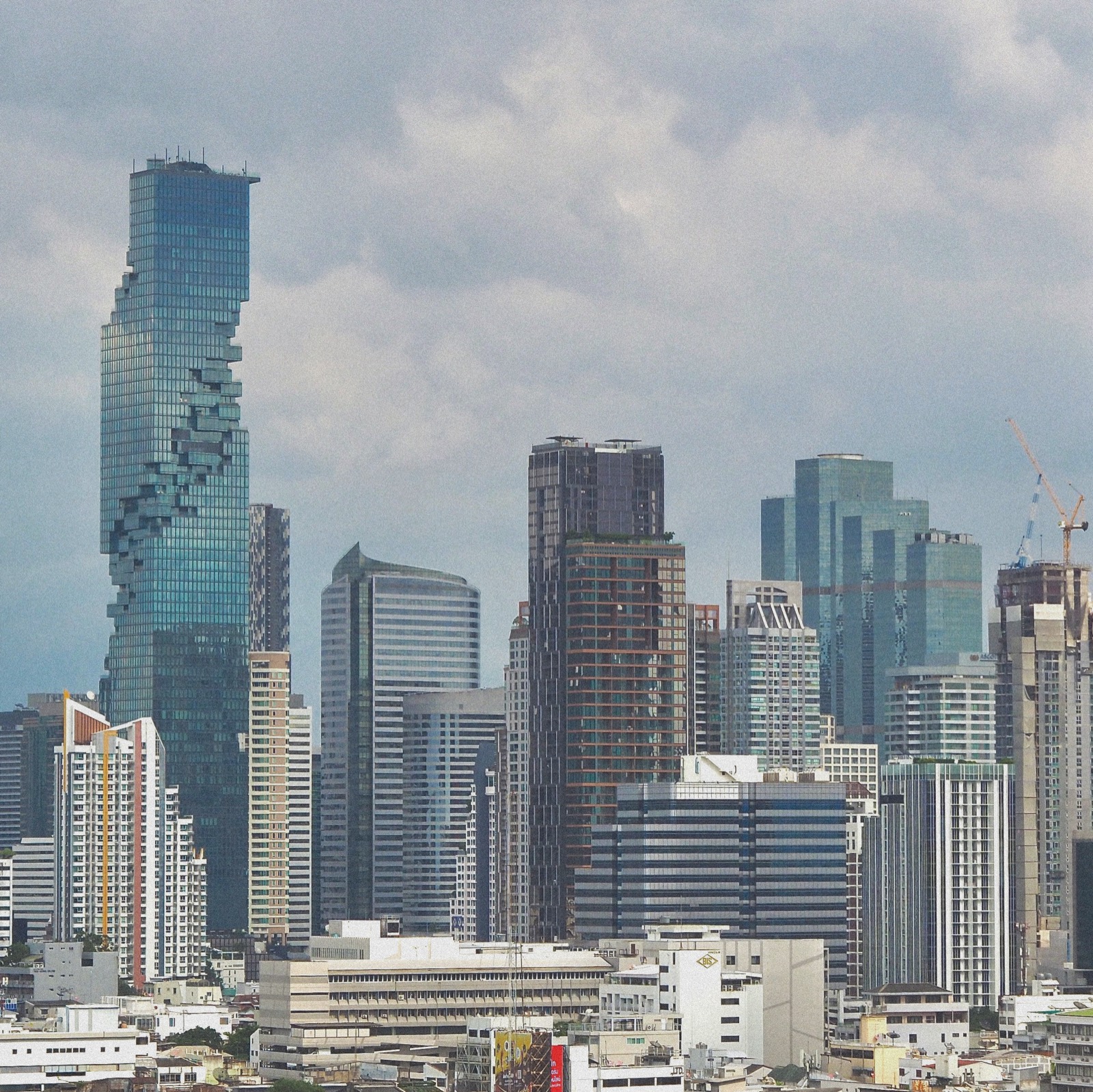
Bangkok, Asia's fourth luxury pillar
Bangkok is not where it was five years ago. The signals are legible in the physical landscape alone: Hermès has doubled its Central Embassy flagship, its new facade a champagne-coloured lacquer evoking split bamboo stems; Cartier opened a duplex at Siam Paragon integrating Pudtarn-inspired stained glass and straw marquetry; Richard Mille and Buccellati both chose Bangkok for their first APAC footprints. Louis Vuitton made the city the sole Southeast Asian stop of its global Monogram anniversary campaign. These are not exploratory moves. They are commitments.
The market numbers support the physical evidence. Thailand's luxury sector, valued at approximately USD 2.4 billion in 2023, is projected to reach USD 3.6 billion by 2029, at a CAGR of 9%, outperforming both mainland China and mature European markets. Thailand has already surpassed Singapore in luxury market size, driven primarily by locals rather than tourist consumption, and primarily by fashion rather than watches and jewellery. Kering identified Thailand, alongside Vietnam, the Philippines and Indonesia, as a core pillar of its emerging markets strategy at its April 2026 Capital Markets Day, noting that Southeast Asia collectively represents EUR 34 billion in luxury personal goods demand, approaching the scale of mainland China.
What distinguishes Bangkok from other Asian luxury capitals is the nature of its consumer. Unlike China, where price fatigue and over-commercialisation have dampened appetite for experiential activation, Thai consumers remain highly receptive to physical and emotional brand experiences. The celebrity ecosystem compounds this: Thai BL actors have become global fan magnets, demonstrated when Dior's Paris show crowd came not for Robert Pattinson but for Nattawin Wattanagitiphat and Phakphum Romsaithong. The idol fandom dynamic here is structurally different from Korea's, more socially embedded, more purchase-motivated, and increasingly international in its reach.
The digital layer is equally specific to Bangkok. Line, with 54 million Thai users, has emerged as a functional luxury sales channel: Louis Vuitton, Chanel and Cartier now operate official accounts on it, and the number of luxury brand accounts grew 20% year-on-year, with followership up more than 40%. This is not a market that maps neatly onto China's WeChat playbook or Korea's Instagram-first logic. It has its own platforms, its own influencer codes, and its own purchasing rituals.
For brands still treating Bangkok as a secondary market or a tourism-dependent retail stop, the window for that misreading is closing.