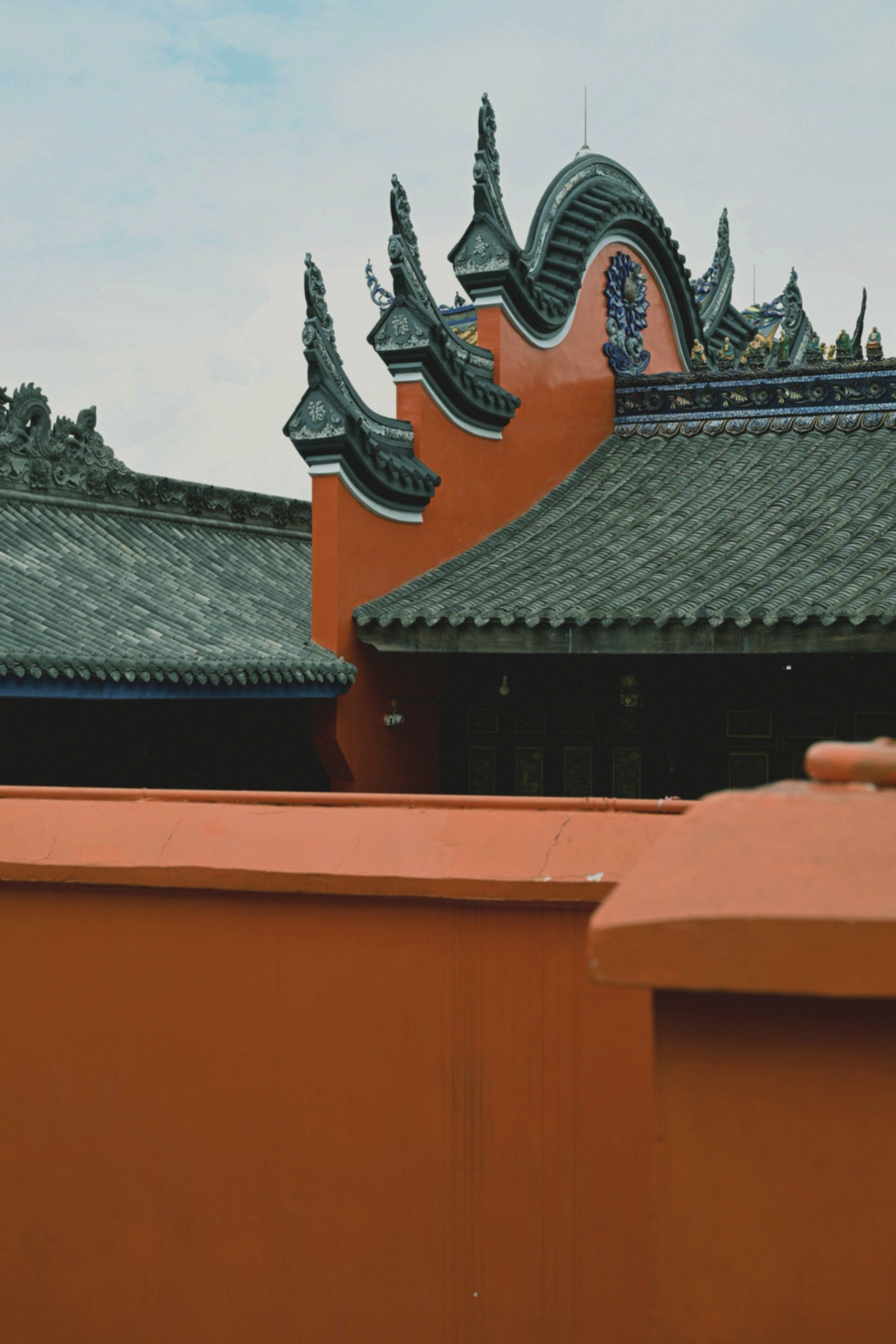
Aesthetic shift: China's new cultural confidence
In the post-Covid period, guochao accelerated as a visible cultural and commercial force, reshaping how brands in China construct value through identity and narrative.
For a long time, luxury in China was shaped by an outward orientation: defined by European heritage brands as its silent reference point, while local visual languages were kept at a subtle remove in order to remain globally legible. Guochao reverses this trajectory. It is no longer about imitation or assimilation, but about centering. It repositions “Chinese-ness” as a visually and culturally desirable code, not as folklore, but as contemporary language.
The sportswear company Li-Ning is often cited as the inflection point, shifting from product-centered branding to cultural systems, where design drew on local references such as school uniforms, 1990s pop culture, and military aesthetics. Across categories, from beauty to technology, the same logic emerged: value moved away from function alone toward symbolic density, narrative ecosystems, and the ability of products to carry identity and belonging.
What distinguishes guochao from other forms of identity branding is its relationship to time. It does not attempt to preserve tradition, nor simply recycle it. Instead, it accelerates it into something futuristic. Historical references are treated as raw material. Fragmented, remixed, sometimes pushed to the point of abstraction until they function less as memory than as visual code.
There is also an implicit social logic. Consuming guochao is not only a matter of buying local. It is an act of participation in a broader narrative: a collective reassertion of cultural confidence, where China is no longer positioned as a receiver of aesthetic authority, but as a producer of it.
As with other experiential economies in Asia, value is no longer contained within the object itself. It sits in the object’s ability to signal belonging, alignment, and position. But in the case of guochao, that belonging is not abstract or global, it is explicitly situated. For international brands, the challenge is no longer localization, but cultural participation. It requires deeper cultural literacy, collaboration with local creators and influence networks, and an understanding of how aesthetic authority is now produced within China.